
How to Make a Lighter at Home
While incarcerated for a short time, I soon learned the art of many things. I learned how to split one matchstick into four, and how to light a cigarette without a match, butane gas, or petrol lighter — mainly because prisoners were not allowed fuel.
I also learned how to make a homemade (prison) lighter, known by the following names: a sailor's, soldier's, trench, and shepherd's lighter. And, with so much time on their hands, soldiers and prisoners of war made 'trench art' from spent bullets, artillery shells, and other items of modern warfare. Even the wives of soldiers and civilians would collect debris from battlefields to transform for utilitarian purposes and personal mementos, including lighters.

An Environmentally-Friendly Lighter
This kind of lighter is a must-have, not just for people in windy places. It's perfect for camping—as a survival tool—or as a backup when you run out of butane or petrol for your usual lighter.
Now that I'm a free man (woo-hoo!), I still use this lighter on windy days or when my regular lighter is out of fuel. Even strangers admire it when I offer to light their smoke after seeing them struggling in windy weather.

What You Need
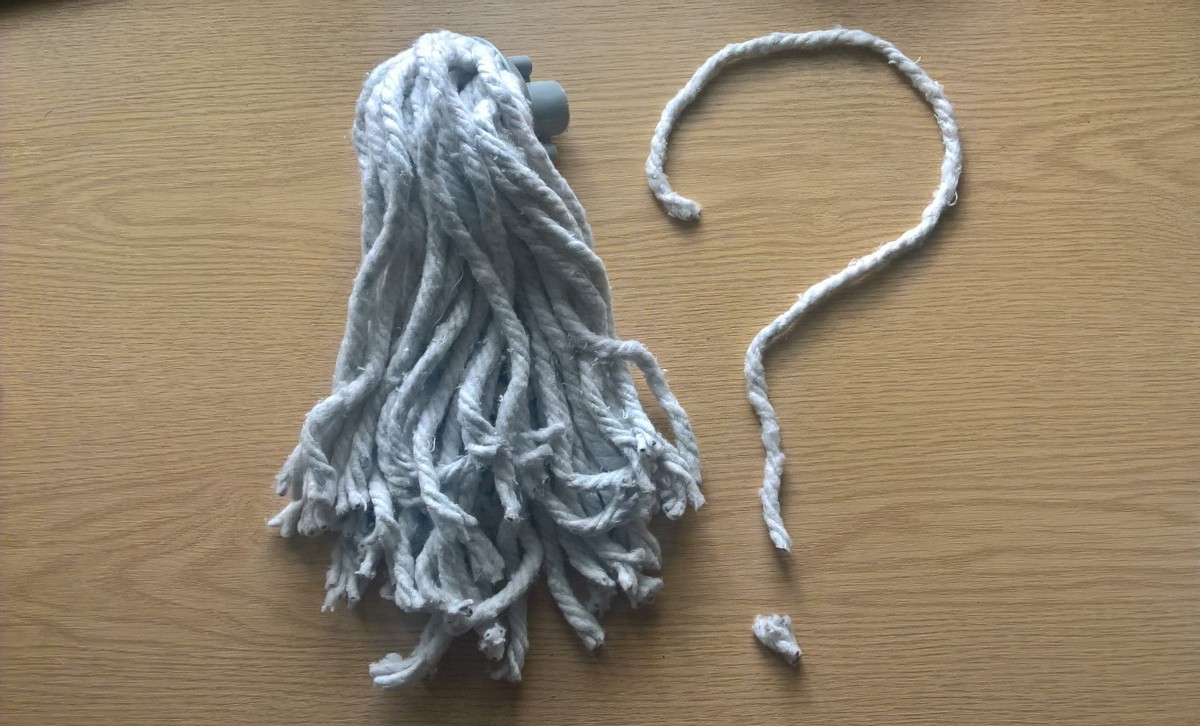
- Three strands of a mop
- Clipper flint barrel
- Thick plastic or metal thin tube
1. Three Strands of a Mop Head
Three strands of a mop head. How do I know if I have the right mop head material? Set the tip on fire, then immediately blow it out. If it extinguishes immediately and starts to melt, it's no good. If it continues to burn like embers of a coal or wood fire, regardless of how hard you try to blow it out, it's perfect (as shown in the image "4. Priming the Wick" further down the page).
- What else can I use instead of a floor mop? As long as they 'burn' correctly, you can use rope or string (depending on their material). If the 'rope' is too thick, pull the strands apart until the size/strands are suitable: If the 'string' is too thin, Plait as many lengths of the string together until they're wide enough to use. I.e, be able to easily fit inside the barrel and slide up and down, but not too easily.
2. Clipper Flint With Its Barrel
Other brands of lighter (with a flint) are available.
3. Thick plastic or metal thin tube
You'll need either a thin metal or hard/thick plastic or metallic tube that's large enough to fit the Clipper lighter flint barrel inside.
- What else can I use instead of metal or plastic tubes? Make your own case/lighter by using a small piece of wood (or metal) then cut into a small block (as seen in the image above). Make two holes and add your design, and you're good to go.
Simple Steps to Make a Homemade Lighter
- Plait the three mop strands together
- Make the holder
- Add the components together
- Prime the wick
- Light it


1. Plait the Three Mop Strands Together
Tie the three strands together in a knot at the end, then plait (similar to plaiting/braiding hair). If you don't have anyone to hold the end for you, use a heavyweight (as shown above) or place the knot end inside a heavy drawer to hold in place while you plait.
Ensure to plait as tight as possible to ensure it lasts as long as possible. Then tie a knot at the bottom. See the photos above.

2. Make the Lighter Holder
Make your lighter holder by cutting your desired tube into two pieces. Ensure each piece is 2 inches (5.08 cm) long. Too short and the Clipper barrel won't fit. If it's too long, when the wick is running low, too much of the wick will be stuck inside the (too long) tube.


3. Add the Three Components Together
Stick the two tubes together using either glue, sticky tape, and/or cotton. Whatever you like, as long as they are firmly stuck together. If the Clipper barrel is too large for the tube, wrap some tape around it to make it fit firmly in place.

4. Prime the Wick
The only way the lighter (wick) will work is by priming the wick first, by setting fire to the end. Then blow out the flame and suffocate the smoking end inside the tube. This will extinguish the burning wick.
Note: The 'blackened' burned stuff is what is needed to help light your new lighter when struck with the flint. The more black stuff that is on the end, the easier it will be to light.

5. Light It Properly
When striking the flint, use your finger or thumb (depending on how you hold the lighter) to gently push the blacked end as close to the flint as possible while blowing on it. Blowing helps ignite the wick/mop.
Once alight, it will not go out unless you pull it back down inside the tube to suffocate it. To ensure the burning end does not accidentally slip out of the tube while inside your pocket and continue to smoke (burn), use an elastic band to hold in place.
Congratulations! You now have the know-how to make a 100% fuel-free, windproof, flameless, reliable lighter.


No comments:
Post a Comment