
Introduction
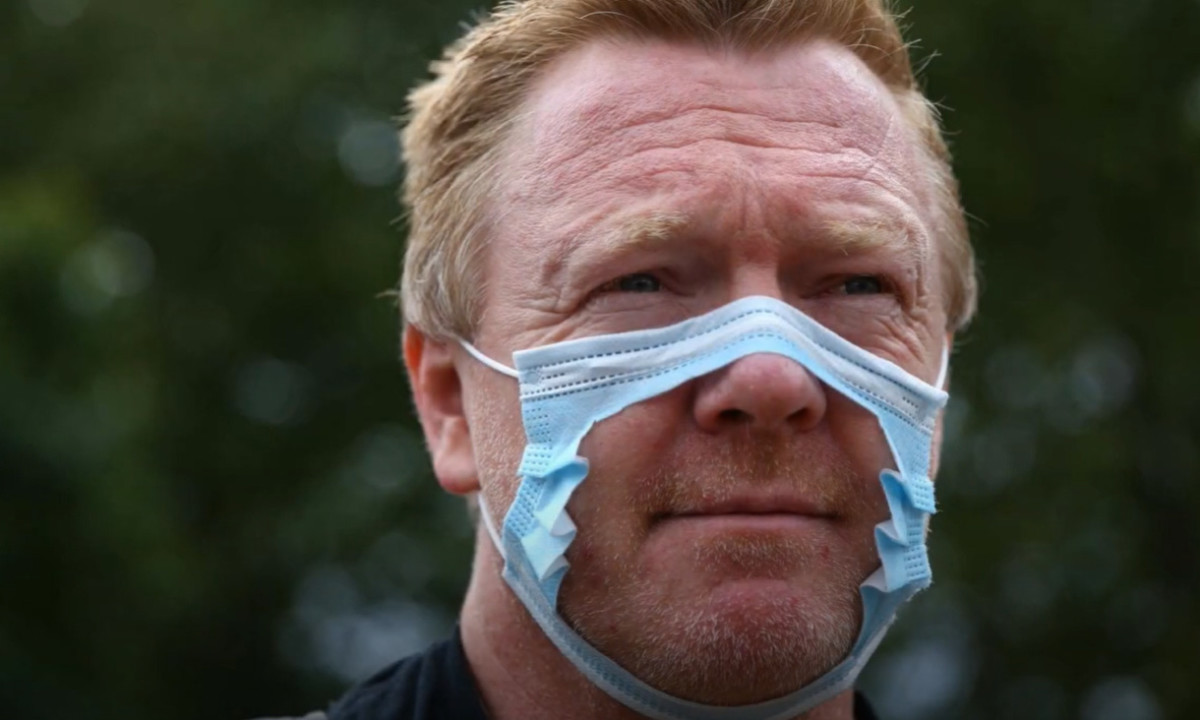
When face coverings became mandatory in shops and on public transport, it ignited controversy and scepticism among many. Some deemed the requirement unnecessary and even harmful.
This mandate led to heated debates and confrontations between those refusing to wear masks and those supporting their use.
In the scientific community, opinions vary. Some experts insist that masks 'effectively stop the spread of the virus and are crucial in controlling its transmission,' while others argue that limited evidence supports mask use and that they may even do more harm than good.
List Of Contents
- The Exempt
- Anti-Maskers
- Covid-19 Sceptics
- Anti-Government
- Common reasons why all types of people are refusing to wear a facemask
- Who is right?
- Will we ever know who or what to believe?
- We Wear the Mask - P. L. Dunbar (Powerful Life Poetry)
- Poll: How important is wearing a face-mask?
Please be mindful and respectful of anyone you see who is not wearing a face mask because they could be genuinely exempt for the following reasons...
The Exempt

The Exempt includes...
- Severely claustrophobic people who find it harder to breathe with a face covering are exempt.
- If a face covering causes severe distress, you're exempt.
- Anyone who relies on lip-reading or facial expressions to communicate is exempt.
- If it negatively impacts your ability to exercise in a public place, you're exempt.
- Children under a specific age (depending on the country) are not required to wear face coverings for health and safety reasons.
- Anyone who cannot put on a face mask due to a physical disability, mental illness, or impairment is exempt.
- Let's not forget the anti-maskers who use the 'exempt' reasons as an excuse to never wear a face mask in public.
Many people believe that those exempt from wearing masks should consider using a face shield or some form of visible identification, such as an Exempt ID card, as a gesture of respect and consideration toward others who are wearing masks
The Anti-Maskers

This group has been very public about their issues by taking to London's streets in many high-profile protests involving thousands of people opposing face masks, lockdown rules, and restrictions. In their defense, many scientists and health professionals have publicly spoken out to support them.
Many have said, 'no medical evidence supports the wearing of face masks.' 'Wearing a face mask can be dangerous to your health' — 'masks reintroduce dangerous expelled materials back into your lungs, which can cause carbon dioxide poisoning.'
Others believe that wearing a face mask is not the solution. We have never had a cure for the cold, let alone Covid, and they believe that society 'cannot continue to live a life being permanently masked' (muzzled).
Moreover, masks have led to massive waste, with discarded masks littering streets and the countryside. Some of these masks are contaminated and pose a risk to wildlife and the environment when they end up in landfills. It has become a problem similar to the plastic carrier bag crisis.
Covid-19 Sceptics

This section focuses on individuals skeptical about the existence of Covid-19 and the measures taken to prevent its spread. Among these individuals are health professionals and high-profile figures who have publicly spoken out against these measures in large protests, such as the one held in Trafalgar Square.
These figures include former British footballer David Icke, the brother of former Labour politician Piers Corbyn (footage) and suspended nurse Kate Shemirani (footage), who have all claimed that Covid-19 is a "SCAM-demic" and a "conspiracy to control the masses".
Research conducted by the State University of Londrina found that people who are less likely to comply with Covid-19 prevention measures, such as wearing a mask and social distancing, tend to have antisocial traits such as low levels of empathy, high levels of callousness, and a tendency to take risks.
Other reasons why some individuals might be sceptical about wearing face masks during the COVID-19 pandemic. Some individuals believe that there is limited scientific evidence to support the effectiveness of face masks in preventing the spread of COVID-19. As an infringement on their personal freedom and autonomy.
According to Pew Research, one-fifth of Britons believe Covid-19 is a hoax. According to the Oxford Coronavirus survey. A quarter of people in the U.S. think there is some truth to these conspiracy theories.
Anti-Government
At an anti-mask and anti-government rally in London, one speaker said, "the government is a form of religion. It is statism, and a lot of people will follow the government rules and regulations because they like to follow orders." Another referred to the Covid-19 situation as a "Covid-19 PLANDEMIC." Many individuals do not trust the government's stance on the seriousness of Covid-19 because they lack trust in the information and policies communicated by the government that make it difficult for them to accept the mandates on wearing masks.
If the government were to advise eating two bananas per day for good health, they would likely avoid bananas, and speculation of a banana conspiracy would arise. Additionally, they don't want to be "parented by an overbearing government," and the government should not dictate what they wear.
There is ongoing scientific debate and conflicting information about the effectiveness of masks in preventing the spread of Covid-19, and those who are anti-government may choose to rely on sources of information that they believe to be credible, regardless of what the government says.
It is important to note that while individuals who are anti-government may have strong beliefs about why they do not want to wear masks, it is crucial to consider the potential public health implications of not wearing masks during the pandemic.

Common Reasons Why All Types of People Are Refusing to Wear a Facemask
- The most common complaints are; I can't breathe properly. It ruins my makeup. The elastic bands hurt the back of my ears. They made my glasses steam up.They leave marks on my face. People can't hear me properly.
- Some individuals are concerned that wearing a mask could lead to health problems, such as an increased risk of infection, due to misinformation or a lack of understanding about the proper use and handling of masks.
- Some people have concerns that prolonged mask-wearing for will lead to them rebreathing their own carbon dioxide, causing oxygen deprivation.
- Wearing a mask for long periods can cause discomfort, especially for those with breathing problems or skin sensitivities.
- Masks can become moist from breathing, making them uncomfortable to wear.
- People are concerned that disposable face masks could releasing chemical pollutants and nano-plastics. The science daily reports on Nanoplastics and other harmful pollutants found in disposable face masks.
- For most people, no more so, than the deaf and hard of hearing community, the wearing of a mask can make it difficult for individuals to communicate effectively, especially in situations where clear and concise speech in a business setting or while giving a presentation. Muffled voices and mask-wearing can also be a barrier to interpersonal communication, as facial expressions and lip movements are cues in understanding non-verbal communication.
- Gets in the way of eating and drinking in public, leading to frustration and decreased compliance with mask-wearing guidelines.
There is a lot of misinformation and conspiracy theories circulating online and offline about the pandemic, which can lead some individuals to doubt the necessity of wearing face masks that can include false claims about facemasks being ineffective, dangerous, or used as part of a larger government plot.
It's important to emphasise that while some of these reasons may be valid concerns against the scientific evidence that supports the use of masks in controlling the spread of COVID-19. Wearing masks has been shown to be an effective measure in reducing the transmission of the virus, and following public health guidance on mask-wearing is essential for controlling the pandemic.
Who is Right?
The ethics advisory board? - Scientists? - Epidemiologists? - World Health Organisation? (WHO) - The Scientific Advisory Group for Emergencies? (SAGE), The government,? The Anti-Maskers...?
The ongoing debate surrounding facemasks, social distancing, and lockdowns during the COVID-19 pandemic leave opinions divided. Some follow the guidance of public health experts, such as the World Health Organization (WHO) and the Scientific Advisory Group for Emergencies (SAGE), as well as government officials. On the other hand, some are sceptical of the advice given and have spoken out against it with confidence and conviction.
The issue is complex and raises questions about who has the correct information and who we should trust. On the one hand, public health experts and the government rely on scientific evidence and research to guide their decisions. On the other hand, some individuals are questioning the validity of this evidence and pointing to inconsistencies in the advice received.
The conspiracy theories they believe in are often based on a lack of facts and promoted through the little information that's available — in the case of face masks, no one had any information about the virus, only the expertise and protocols which previously kept people safe from past viruses, without any experience about this particular virus.
It's important to note that some of the people who have spoken out against facemasks and lockdowns are those within the medical community. While some may view these individuals as less credible, we should consider all perspectives and have an open and respectful dialogue about the issues at hand.
Another aspect of the debate surrounds the issue of personal freedom and the government's role in controlling the spread of the virus. Some individuals believe that the restrictions imposed by the government go against their rights and freedoms and question the government's ability to enforce such measures effectively.
In conclusion, the debate surrounding facemasks and lockdowns during the COVID-19 pandemic is a complex issue with multiple perspectives. We should consider the advice of public health experts and the government while being open to other viewpoints and having a respectful dialogue.
Will We Ever Know Who or What to Believe?
Who knows 100% what to believe about the need to wear a facemask versus the health implications of wearing one.
Not everyone will ever believe that the first moon landing happened, nor will they ever find out the real reasons behind the 9/11 attack, or the truths about the Roswell crash cover-up. Just ask any members of the 'Flat Earth Society.' So how can I or anyone persuade "everyone" that the wearing of a simple cloth around the face is either helpful or harmful to wear during a pandemic?
Keep Safe.
We Wear the Mask - P. L. Dunbar (Powerful Life Poetry)
This poem (unrelated to the pandemic) is about the struggle of black people/African-Americans forced to conform to stereotypes imposed upon them by white society. Dunbar said, "the world was an affair of masks, that he could reveal himself only by the way he concealed himself, and that the truths of his being were masked."
How important is wearing a face-mask?
- 39% A waste of time. It does more harm than good
- 19% It helps a little to reduce being infected, and affecting others
- 14% Yes, it's very important.
- 28% PUT ON YOUR MASK, OR BACK THE FCUK UP BEOFORE SPEAKING TO ME!


No comments:
Post a Comment